EU law increasingly regulates the use of PFAS, the so-called "forever chemicals". For MedTech and pharma companies, the implications are significant and some restrictions already apply.
Read more →
Diagnostics
Medical Devices
Regulatory Compliance and Enforcement
Blog
The Court of Justice (CJEU) clarified distributor obligations under Article 14 MDR (and IVDR) recently in the Dürr Dental case (C-10/24). Spoiler: it's not surprising but clarifying, with a dash of novelty.
Read more →
Food and Feed
Advertising and Claims
Regulatory Compliance and Enforcement
Blog
Premium pet food is booming, marketed with language borrowed straight from the food aisle. But legally, pet food is not food at all: it is feed, governed by an entirely different set of EU rules on labelling, ingredients and claims. Where exactly is the line between a bag of kibble, a specialised nutritional feed and a veterinary medicinal product, and how easily can a bold marketing claim push a product across it?
Read on foodhealthlegal.eu →
Food and Feed
Healthcare
Advertising and Claims
Regulatory Compliance and Enforcement
Blog
In the Netherlands, advertising disputes over health products rarely reach the civil courts. Instead, self-regulation by the Inspection Board plays a central role, working hand in hand with the Dutch Food Safety Authority (NVWA). New working arrangements between the two bodies, in force until the end of 2027, set out exactly when a case stays within self-regulation and when NVWA steps in directly. With the line between a lawful health claim and an unauthorised medical claim often razor-thin, knowing which route applies matters.
Read on foodhealthlegal.eu →
Food and Feed
Advertising and Claims
Regulatory Compliance and Enforcement
Blog
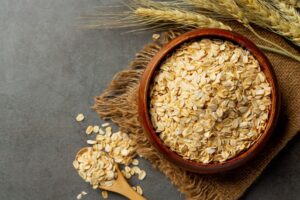
That familiar afternoon slump after a carb-heavy lunch is not just a matter of energy levels, it is now also a matter of EU food law. Positive outcomes in the EU health claim authorisation process are rare, which makes a new EFSA opinion on oat beta-glucans and the glucose peak all the more remarkable, especially since it was obtained via a route that has produced only a handful of successes. The wording of the new claim also differs slightly but significantly from an already authorised 2012 claim, with real legal and commercial consequences.
Read on foodhealthlegal.eu →
Biotech
Food and Feed
Regulatory Compliance and Enforcement
Blog
December 2025 brought two major regulatory proposals from the European Commission: the first part of the EU Biotech Act and the Food and Feed Safety Simplification Omnibus. Together they promise regulatory sandboxes for testing innovative products, a broader advisory role for EFSA, tailored rules for genetically modified micro-organisms, and a move from time-limited to unlimited approvals for substances with proven safety records. For food and feed businesses, that translates into faster market access, lighter administrative burdens and more legal certainty, provided the underlying safety standards keep pace.
Read on foodhealthlegal.eu →
Agriculture
Biotech
Food and Feed
Regulatory Compliance and Enforcement
Spin-out and Starter Advisory
Testimonial
As a partner of StartLife, Axon assisted a feed company with the regulatory qualification of its technology. Our reasoned opinion serves as a key document for the company’s funding activities.
Medical Devices
Regulatory Compliance and Enforcement
Testimonial
We have provided in-house training for the authorised representative of a large multinational on its obligations under the MDR.
Medical Devices
Regulatory Compliance and Enforcement
Testimonial
We have assisted a manufacturer of medical devices in obtaining a derogation from conformity assessment procedures under the MDR in the interest of public health.
Food and Feed
Litigation
Regulatory Compliance and Enforcement
Testimonial
We have advised a company on defending itself against an enforcement action brought by the Netherlands Food and Consumer Product Safety Authority (NVWA).